About
CWRU offers three VR training platforms for healthcare teams to better understand the circumstances and experiences of their patients.
Purpose
To advance health equity for Ohio’s Medicaid population by increasing healthcare providers and their teams’ cultural competence and awareness of implicit bias through virtual reality (VR) and augmented reality (AR) training.
Audience
The VR platforms educate healthcare teams to better understand and serve the needs of their patients.

Why virtual reality training?
Virtual reality experiences allow for full sensory immersion in a simulated environment. Providers can directly observe patients’ challenging circumstances to tailor care to a patient’s social, economic, and environmental factors.

Individuals or groups can register for a VR training session
CWRU teams provide on-site training using:
VR headsets: Can accommodate up to 10 individuals at one time using Oculus Quest headsets.
Chromecast: Larger groups experience the simulations displayed using Chromecast.
Duration
Up to 40 minutes per VR training session, including pre- and post-surveys.
VR Platforms
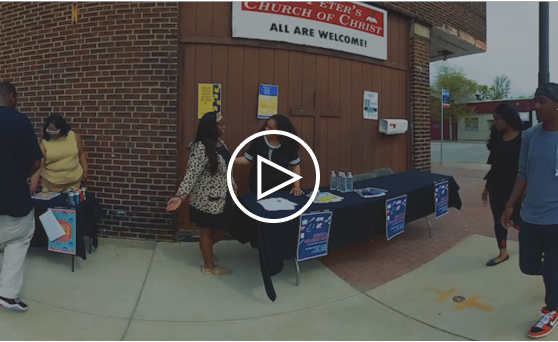
Neighborhood Immersion for Compassion & Empathy
Improve patient care by increasing awareness of social determinants of health and empathy toward individuals living in impoverished, urban communities
In 360-degree video, participants can:
- Experience vignettes of life in a segregated, distressed neighborhood with the challenges of social determinants of health (e.g. poor housing, lack of transportation, food insecurity, violence and racism)
- Discover statistics representing neighborhood characteristics (e.g. foreclosures, crime prevalence)
- Observe how social and economic factors affect health behaviors, health outcomes, management of chronic illness, and life expectancy
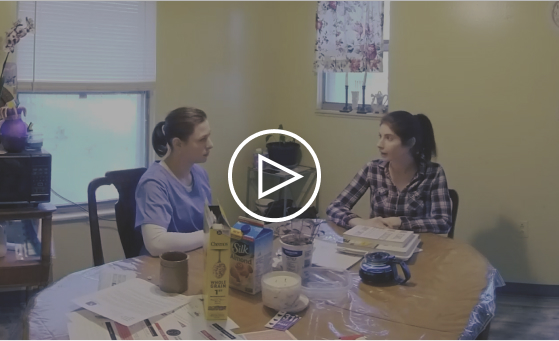
Families Living in Poverty
Sensitize participants to the day-to-day challenges of living in poverty through the observed experience of low-income individuals
In 360-degree video, participants can:
- Meet the Williams family, and observe the life of a low-income family over one month
- Manage challenges such as housing, transportation, and employment by making choices at critical decision points
- Observe how choices impact the physical, social, financial, and mental well-being of the family

Addressing Bias to Improve Maternal & Infant Health Outcomes
Understand how social determinants of health and unconscious bias can adversely contribute to infant mortality and health care disparities
Participants will use a learning management system to:
- Complete eight online learning modules that address how systemic discrimination adversely impacts patients’ well-being and birth outcomes
- View a 360-degree video to learn about challenges identified by mothers and fathers related to their experiences from prenatal to one year postpartum care
- Access an AR app that explores a patient’s pregnancy journey
Meet the Team
Principal Investigator: Michael W. Konstan, MD
Neighborhood Immersion for Compassion & Empathy
Amy Sheon, PhD, MPH
Scott Frank, MD, MS
Families Living
in Poverty
Marie Clark, MD, MPH
Claudia Hoyen, MD
Addressing Bias to Improve Maternal & Infant Health Outcomes
Margaret Larkins-Pettigrew, MD, MEd, MPPM
Bernadette Kerrigan, MSSA, LISW
Gina Weisblat, PhD